Keep authority
with your passkey.
A device passkey authorizes root actions. The on-chain program verifies the signature and binds it to the requested action.
Available in the devnet test flow
 Wardenby Drinker Labs
A smart-account wallet for Solana
A passkey for authority. Clear limits for what comes next. Warden is building a wallet where the rules for spending live with the account, on-chain.
Pre-alpha · Devnet testing available
Unaudited · No mainnet release
0.01SOLper transfer
0.1SOLper day
1SOLper 30 days
01 / The idea
A wallet can separate ownership from everyday activity. Warden’s program gives each layer its own responsibilities.
A device passkey authorizes root actions. The on-chain program verifies the signature and binds it to the requested action.
Available in the devnet test flow
The program supports expiring session keys with scoped permissions, per-transaction caps and lifetime limits.
Program implemented · test UI integration ahead
Shared daily and 30-day spending limits apply across sessions and direct root actions. A passkey approval still has to respect them.
Implemented in the on-chain program
02 / Make the limits tangible
One transfer has to fit every spending limit. Explore four examples using the current devnet test policy.
Daily and 30-day usage accumulate across the account. Splitting an amount across several transfers does not create a fresh account-wide budget.
This is an illustration, with example spending history. It does not connect to a wallet or send funds. Actual transfers also require authentication, sufficient funds and other program checks.
Fits these spending limits
The transfer and both accumulated totals stay within their caps.
Example already spent: 0.02 SOL today · 0.2 SOL in 30 days.
03 / From the actual build
These are captures from the experimental desktop Chrome test flow on 6 September 2026. The finished consumer wallet is still being built.
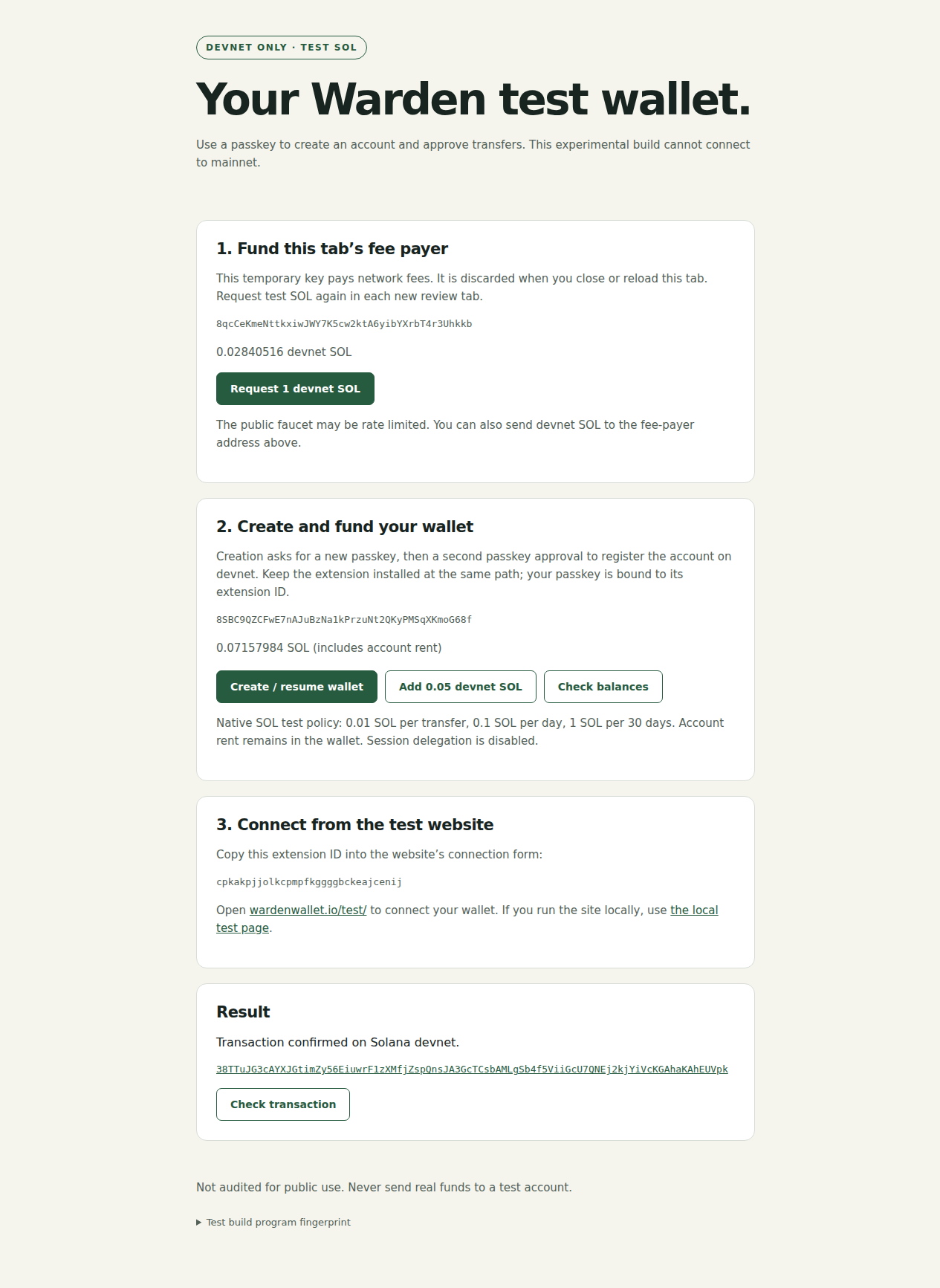
The test flow enrolls a passkey, creates a smart account and uses test SOL for setup.
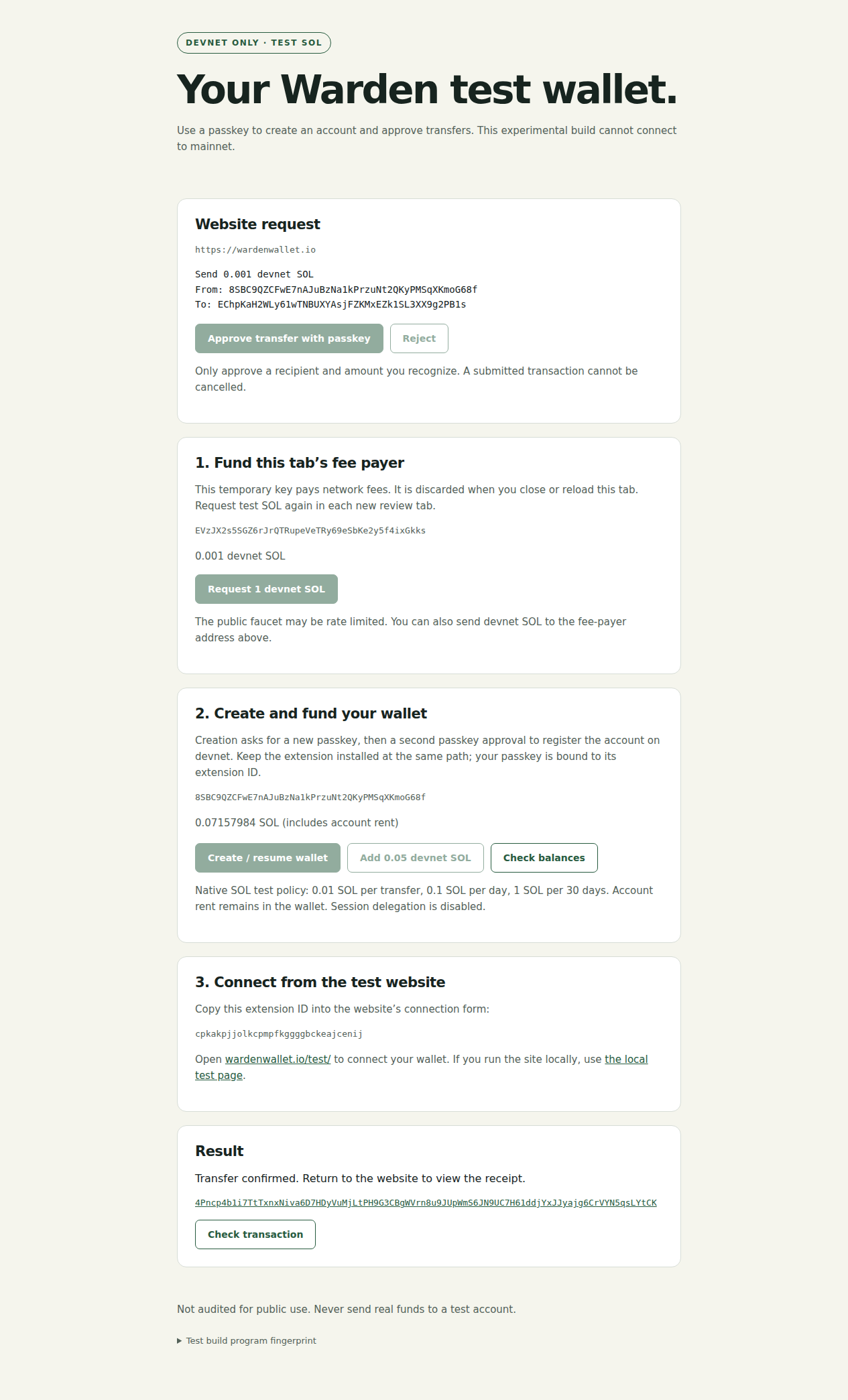
A separate review names the website, amount and recipient before passkey approval.
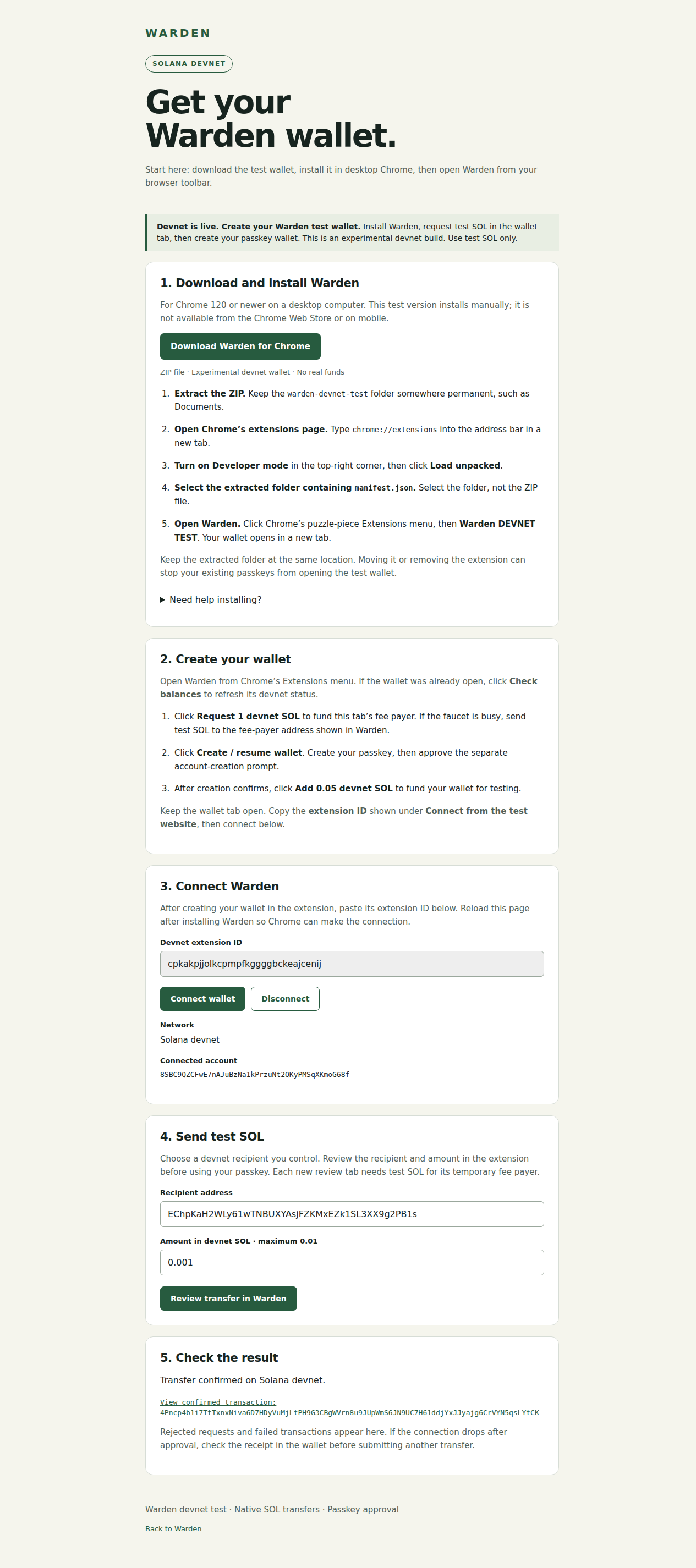
The connected test page reports the result and links to its on-chain receipt.
0.001 test SOL, confirmed on devnet. The recorded run used real network transactions and a simulated browser authenticator. Physical-device passkeys remain unverified.
View the devnet receipt04 / Where Warden stands
Program features, a test interface and a finished wallet are different milestones. Here is the current split.
Available to test
Separate experimental build. Test SOL only.
Implemented foundation
Program capabilities do not mean every feature is available in the test interface.
Still ahead
No launch date or mainnet release is announced.
05 / Take a closer look
The experimental devnet build is available for desktop Chrome. The setup page has the download and step-by-step installation instructions.
Chrome 120+ on desktop · Manual installation
Unaudited · Use test SOL only
Warden is pre-alpha and has not been externally audited. The downloadable test build is limited to Solana devnet. Use test SOL only; mainnet use is not available.
The devnet build installs manually as an unpacked desktop Chrome extension. It is not a Web Store release, and there is no native mobile app available.
The current test build supports its dedicated test website and native SOL transfers. General wallet discovery, everyday app integration and a consumer swap interface are still ahead.
A complete journey in the regular extension: create an account, reopen the browser, unlock the same wallet, receive and send, then connect to apps through wallet discovery. Timelocks, guardian recovery and release assurance remain separate work.